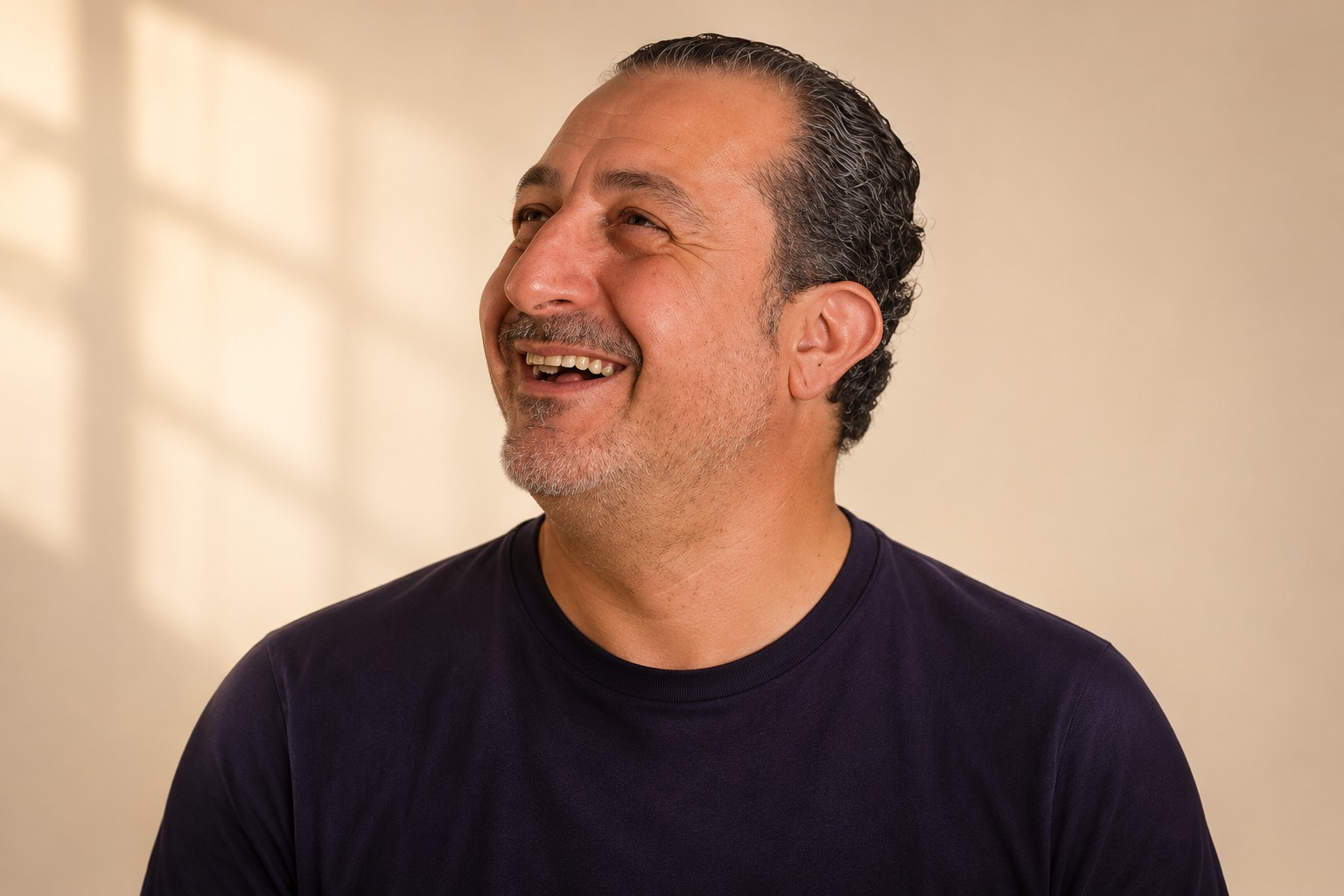
Kamal Mouzawak built Souk el Tayeb and Tawlet around producers and home cooks. His work gives Lebanon’s regional food traditions a shared table, with the people behind each dish at the centre.
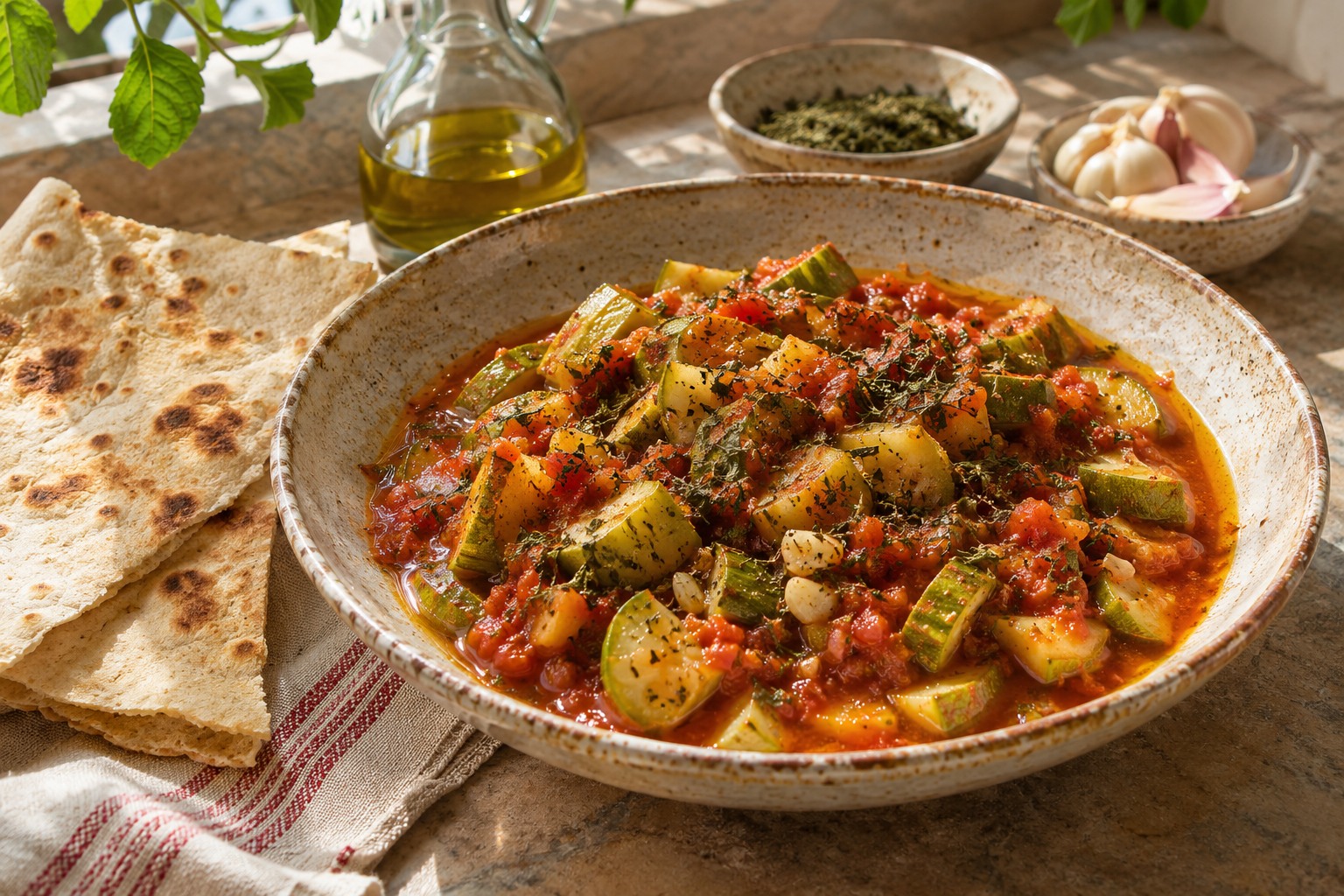
↗Courgette with tomato — courgette, tomato, olive oil.
A market becomes a farmers’ kitchen
Souk el Tayeb began in Beirut in 2004 as a producers’ market. Regional Food & Feast festivals followed in 2007, and Tawlet opened in 2009 as a farmers’ kitchen. The organisation connects small-scale producers with urban diners and supports the preservation of local food traditions. Christine Codsi joined the development of Tawlet. Its rotating cooks, many of them women from different Lebanese regions, make the meal a collective expression of place.
Regional dishes and the cooks behind them
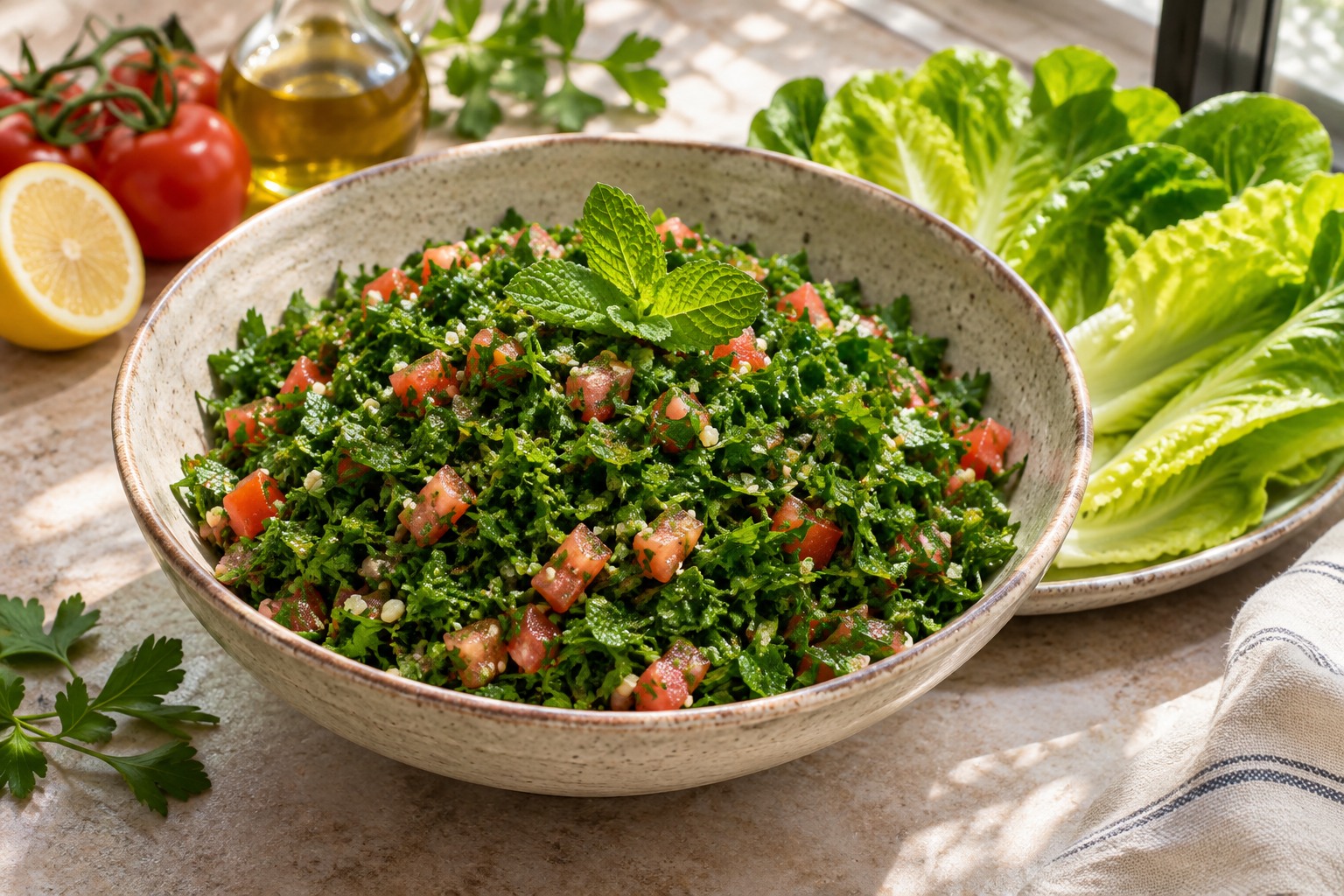
Tawlet’s repertoire changes with the cook and season. Documented examples include zucchini with tomato and dried mint, kibbeh in yogurt, lentil-and-bulgur dishes and orange-blossom milk pudding. Mouzawak’s conversations often return to tabbouleh: finely chopped parsley, tomato, mint, a little bulgur, lemon and olive oil. The point is to notice regional and household differences, then meet the people whose work keeps those differences alive.
Kamal Mouzawak built Souk el Tayeb and Tawlet around producers and home cooks. His work gives Lebanon’s regional food traditions a shared table, with the people behind each dish at the centre.
Kamal Mouzawak built Souk el Tayeb and Tawlet around producers and home cooks. His work gives Lebanon’s regional food traditions a shared table, with the people behind each dish at the centre.
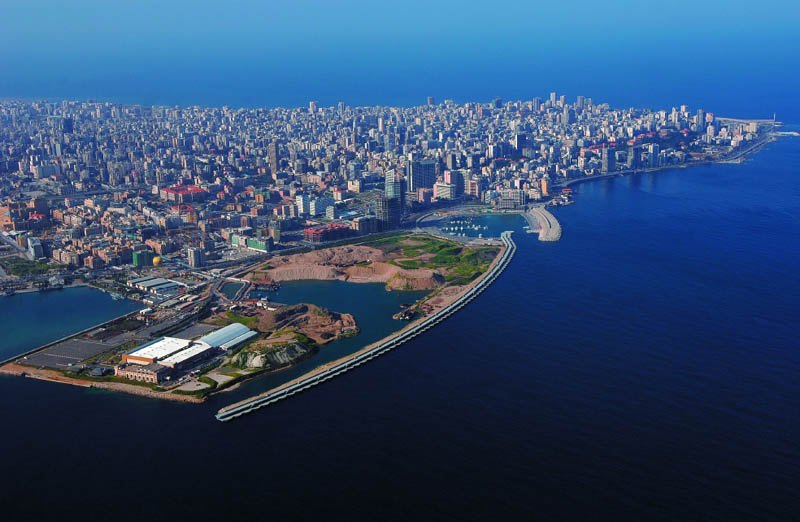
Mezze tables, man’oushe from the oven and coffee in Hamra. Explore Beirut through shared Levantine traditions, checking transport and venue conditions for the day of your visit.