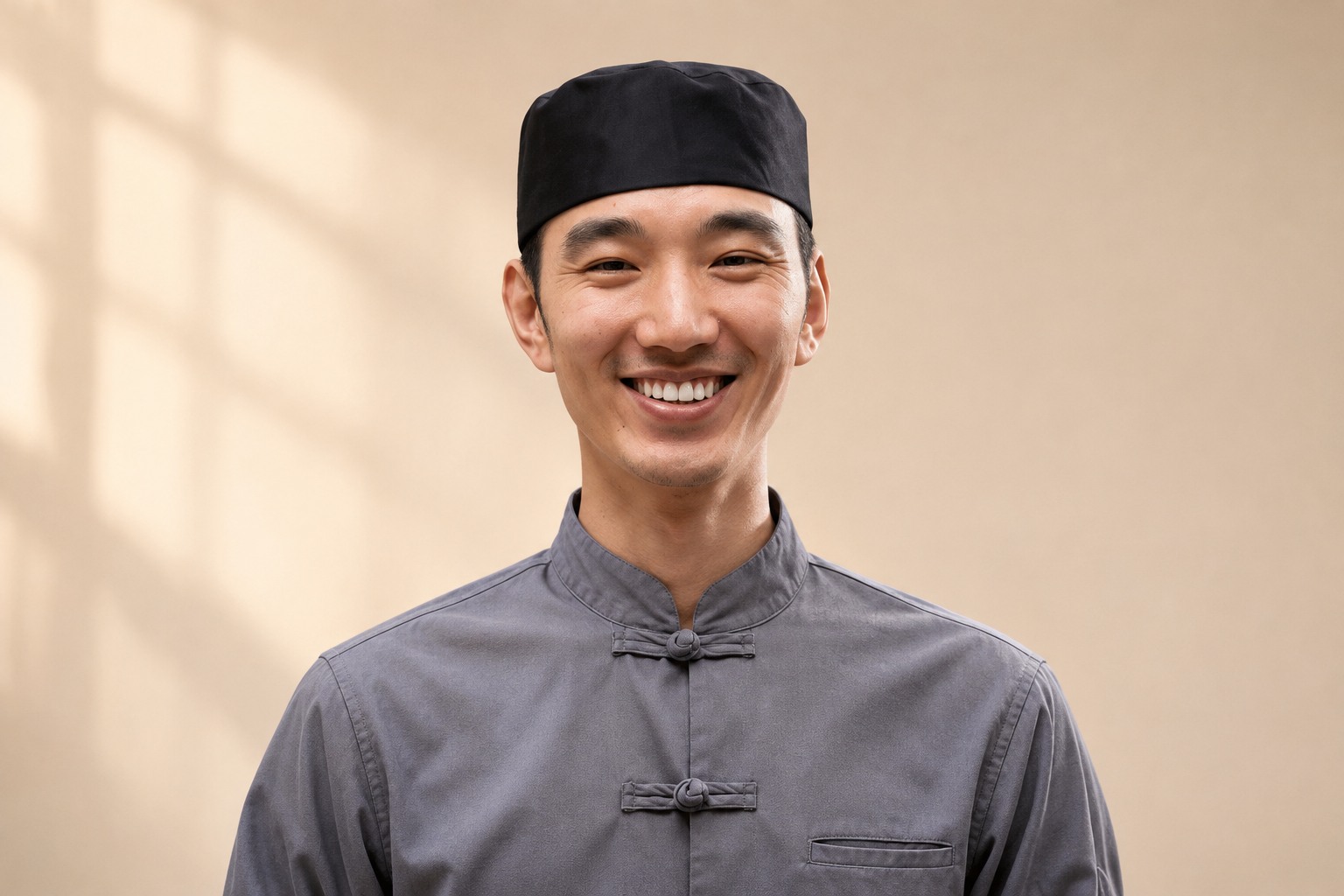
Steven Tang explores plant-based Sichuan cooking at Mi Xun Teahouse. Mushrooms, seasonal vegetables and carefully chosen teas connect a quiet Chengdu courtyard with the region’s farms and flavours.
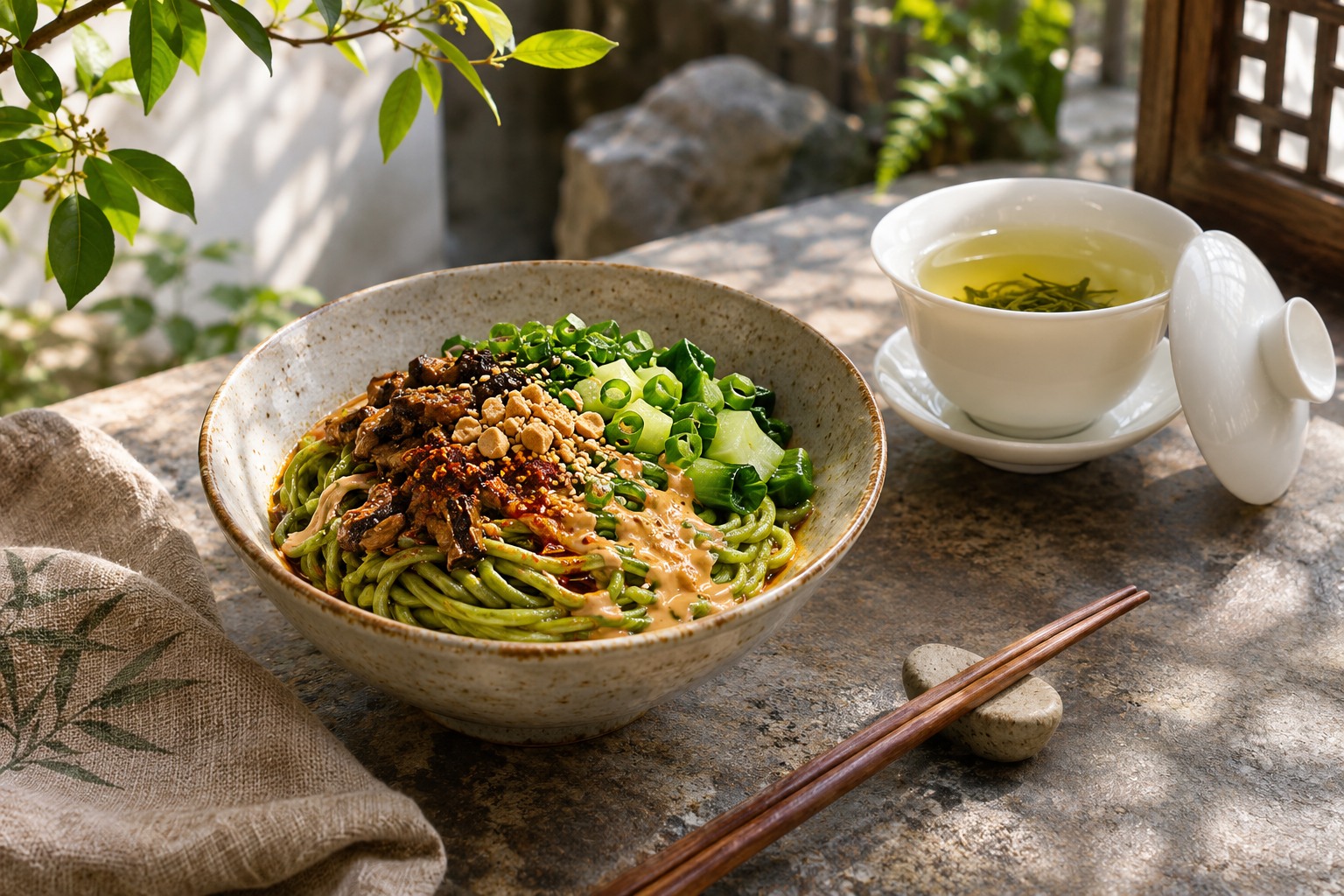
↗Spinach noodles in tea broth — spinach, noodles, tea.
Vegetables with Sichuan character
The restaurant’s courtyard sits near Daci Monastery, whose vegetarian traditions form part of the inspiration. Tang builds depth through mushrooms, vegetables, stocks and seasoning rather than simply removing meat from a familiar plate. The team works with farms around Chengdu and finds uses for ingredients such as mushroom trimmings in stock. This attention to sourcing and kitchen practice complements the pleasures of flavour and texture at the table.
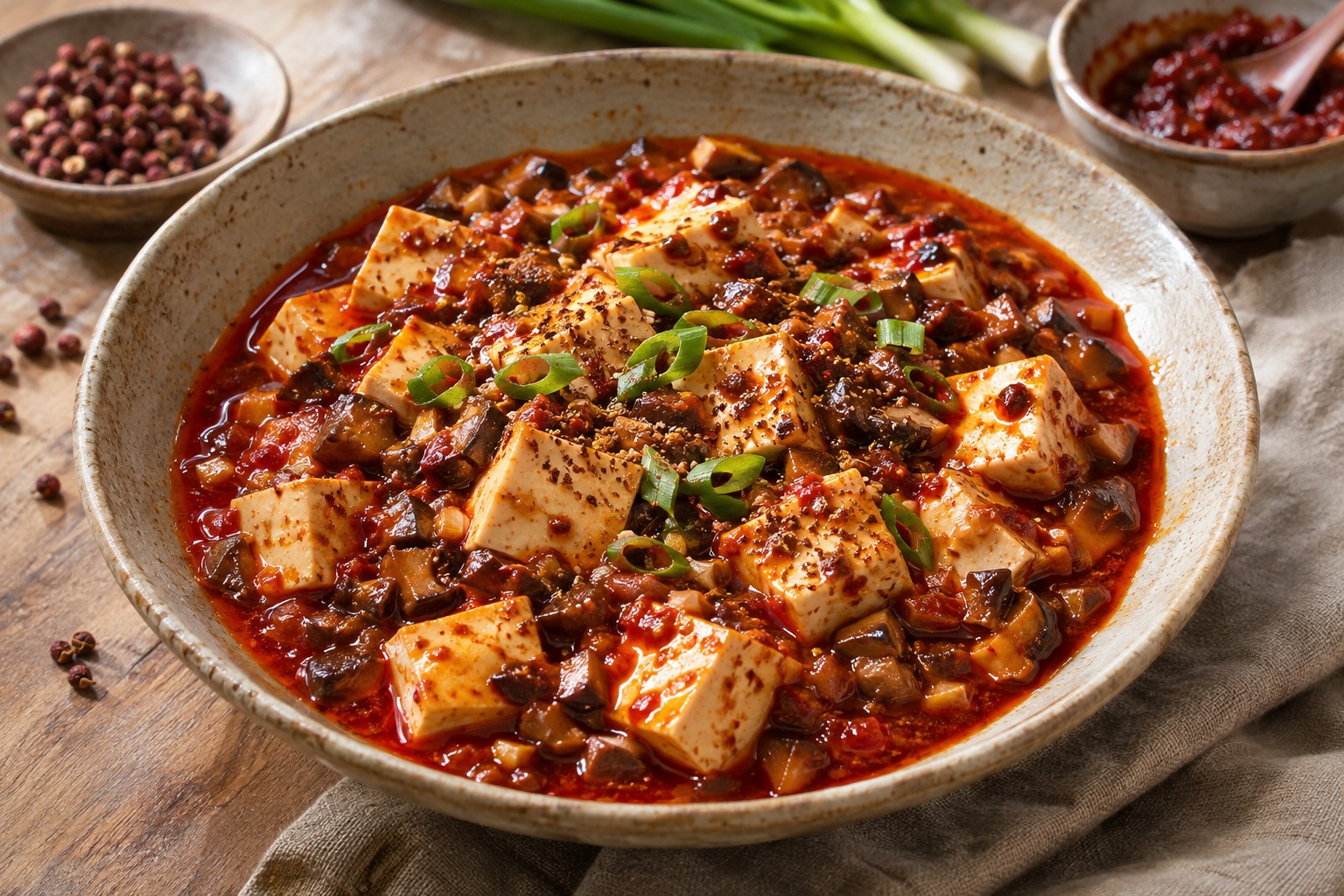
Mushroom mapo and green noodles
Mushroom mapo tofu gives a familiar Sichuan dish a plant-based interpretation, using mushrooms for savoury depth. Handmade green spinach dan dan noodles bring colour and an egg-free dough, with mushroom broth, chilli and peanut-sesame flavours. These examples make the vegetarian approach easy to understand through the food itself. Discuss individual dietary requirements with the team, as vegetarian cooking can still include nuts, sesame, soy or other allergens.
Address
81 Bitieshi Street, Jinjiang, Chengdu 610021, China
Steven Tang explores plant-based Sichuan cooking at Mi Xun Teahouse. Mushrooms, seasonal vegetables and carefully chosen teas connect a quiet Chengdu courtyard with the region’s farms and flavours.
Steven Tang explores plant-based Sichuan cooking at Mi Xun Teahouse. Mushrooms, seasonal vegetables and carefully chosen teas connect a quiet Chengdu courtyard with the region’s farms and flavours.
Mapo tofu’s hot-numbing balance, dan dan noodles and gaiwan tea in the park. Explore Sichuan’s range of aromas and textures without defining Chengdu through chilli alone.